Maximize your network.
The most advanced technology to maximize your network performance and visibility.
AI-powered optimization solving complex problems.

Enhance Subscriber QoE
Higher speed, lower latency and less packet loss.
Powerful features to significantly enhance your subscribers' Quality of Experience.
We thought we were doing all we could with our original QoE solution, but after installing Bequant next-gen QoE our customer support calls dropped by 35%.
Transform your bufferbloat network grade.
If your customers use the popular Waveform bufferbloat test, which will assign a grade to your quality in terms of its bufferbloat and its suitability for gaming applications, the Bequant QoE will provide a significant boost in the grade of your network.
We already had a solid QoE solution in place, but decided to take Bequant up on their 30-day trial — and we're glad we did! Our network latency dropped from 30 ms to 15 ms, and retransmissions fell by 80%. Bequant's team truly goes above and beyond!
BQN Platform Powers 600+ ISPs






























Maximize Network Capacity
More network capacity with smart shaping
Support more users per Access Point, or OLT port, without degrading your subscribers' Quality of Experience, with the following smart shaping features.
More subscribers per Access Point and OLT Port.
Advanced Network Analytics
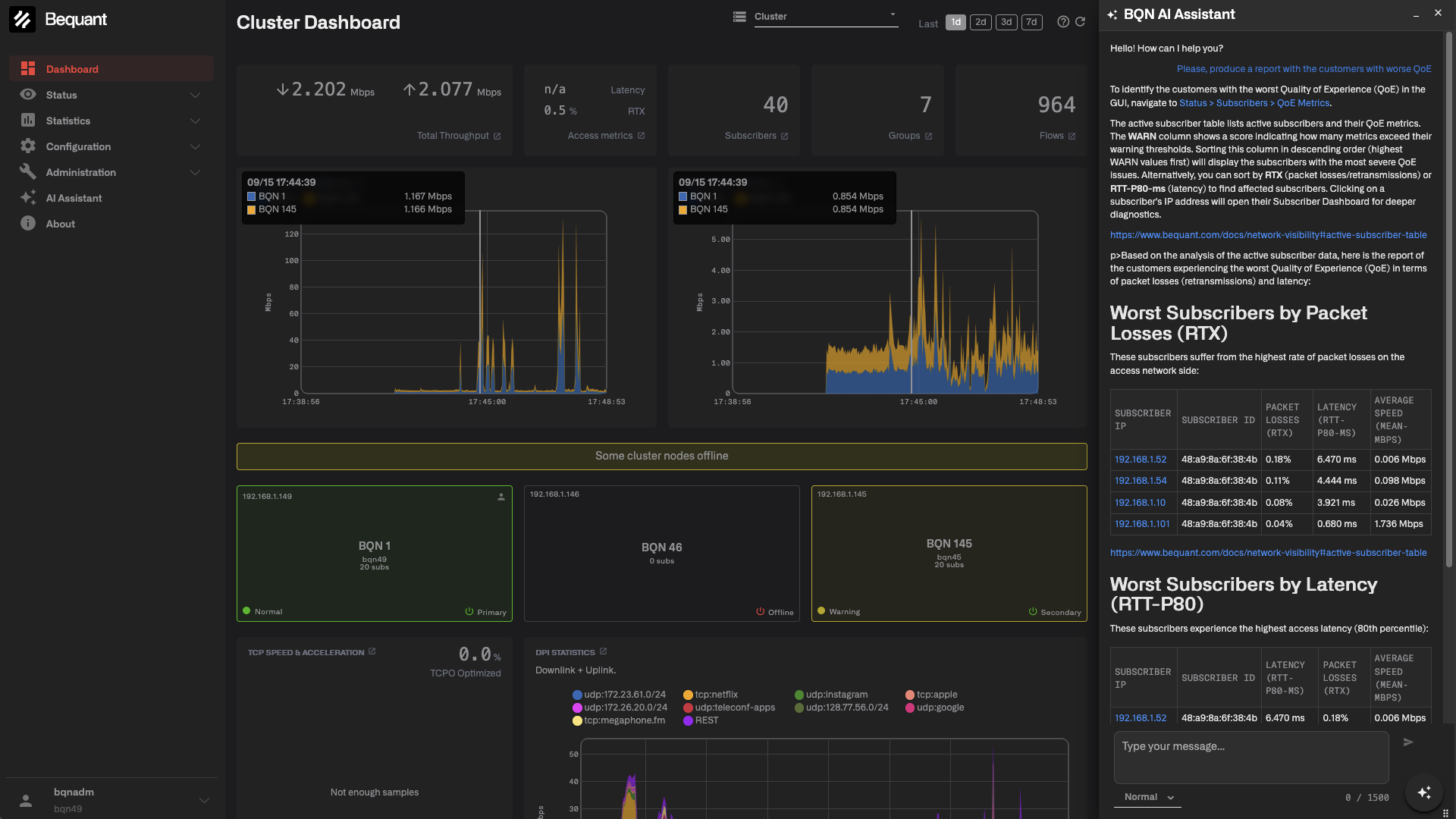
Advanced subscriber, DPI application & network metrics.
Detect saturated Access Points, OLT ports or subscribers, identify customer plan upsells, ensure fast support call diagnosis, and reduce truck rolls.
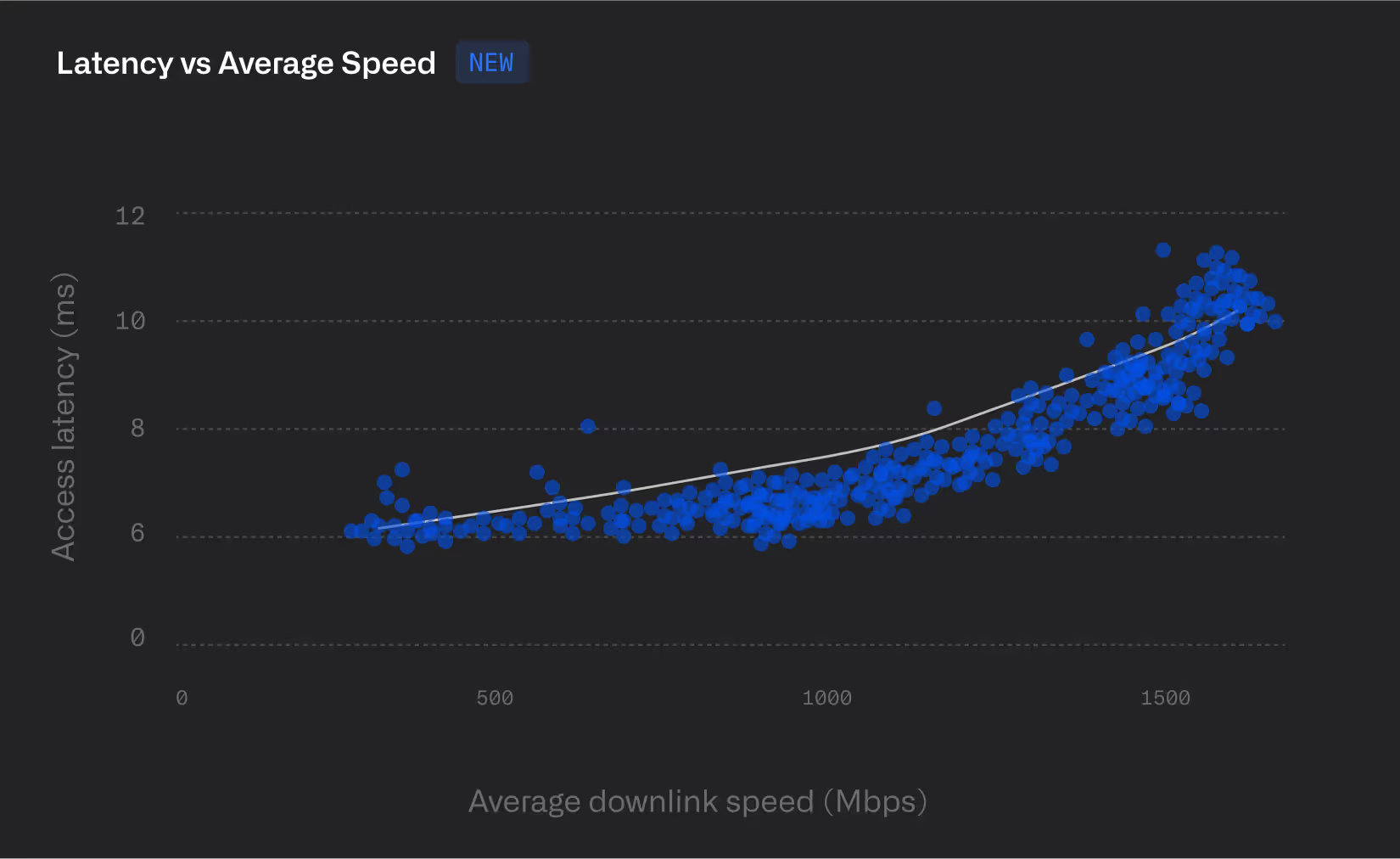
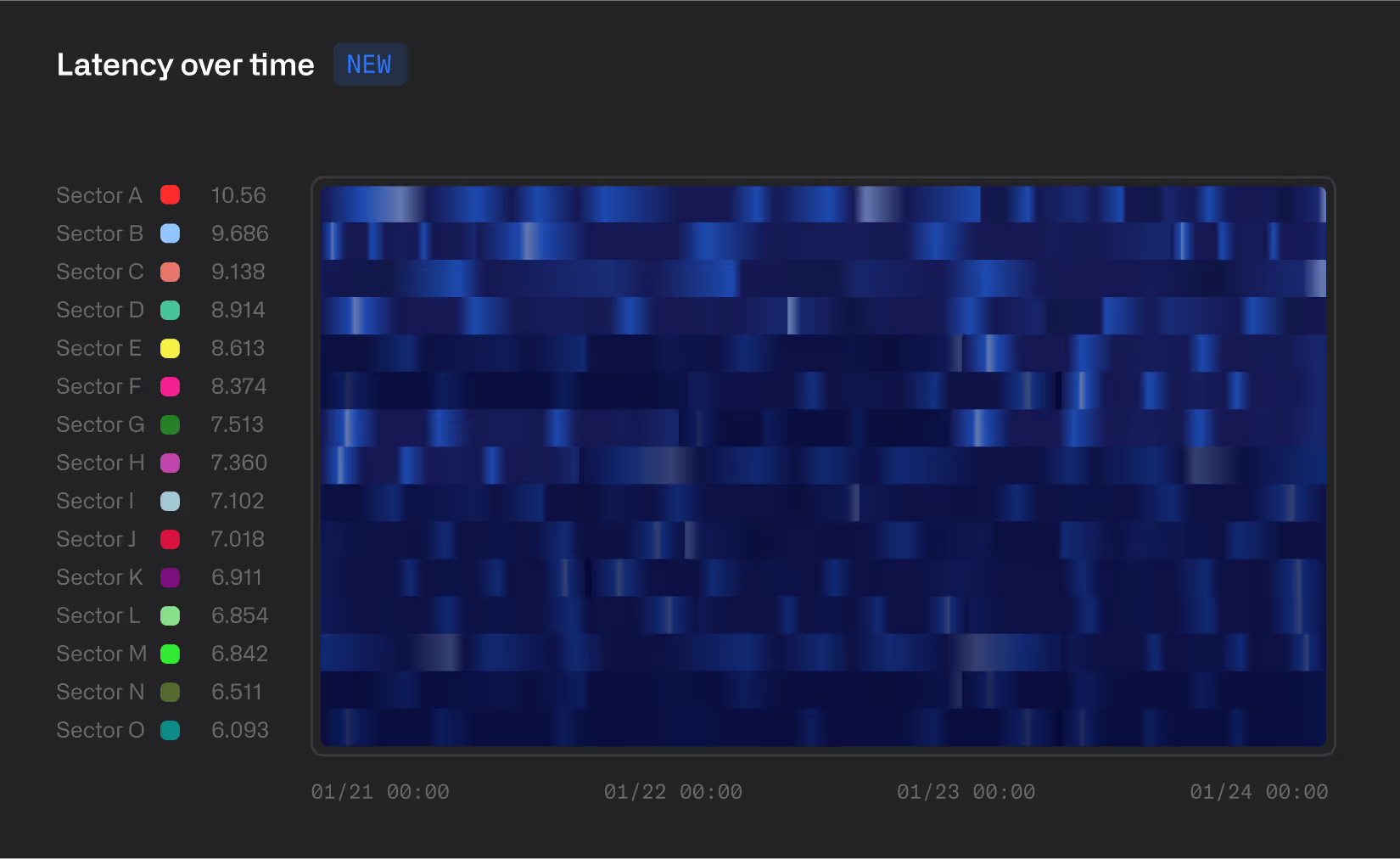
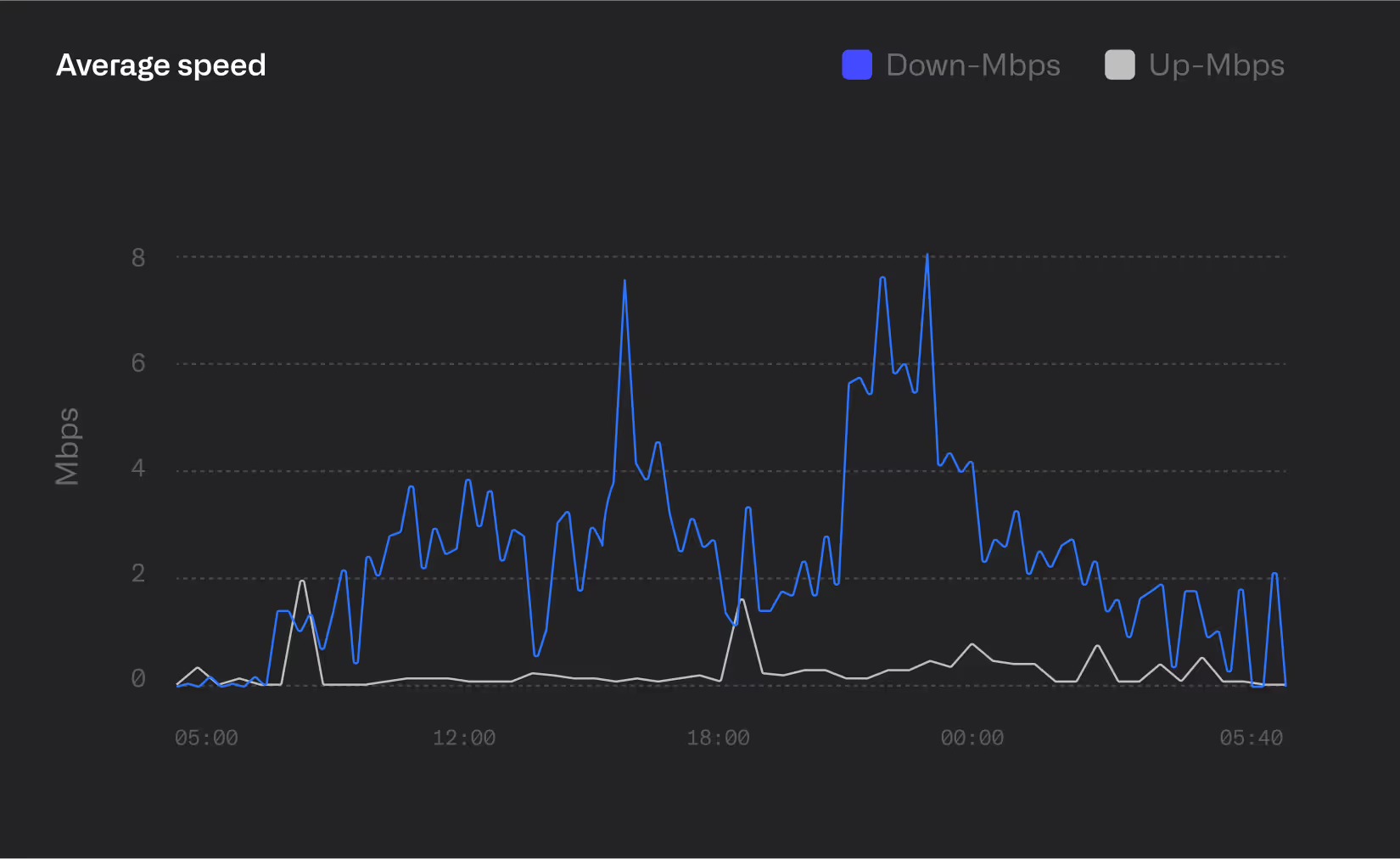
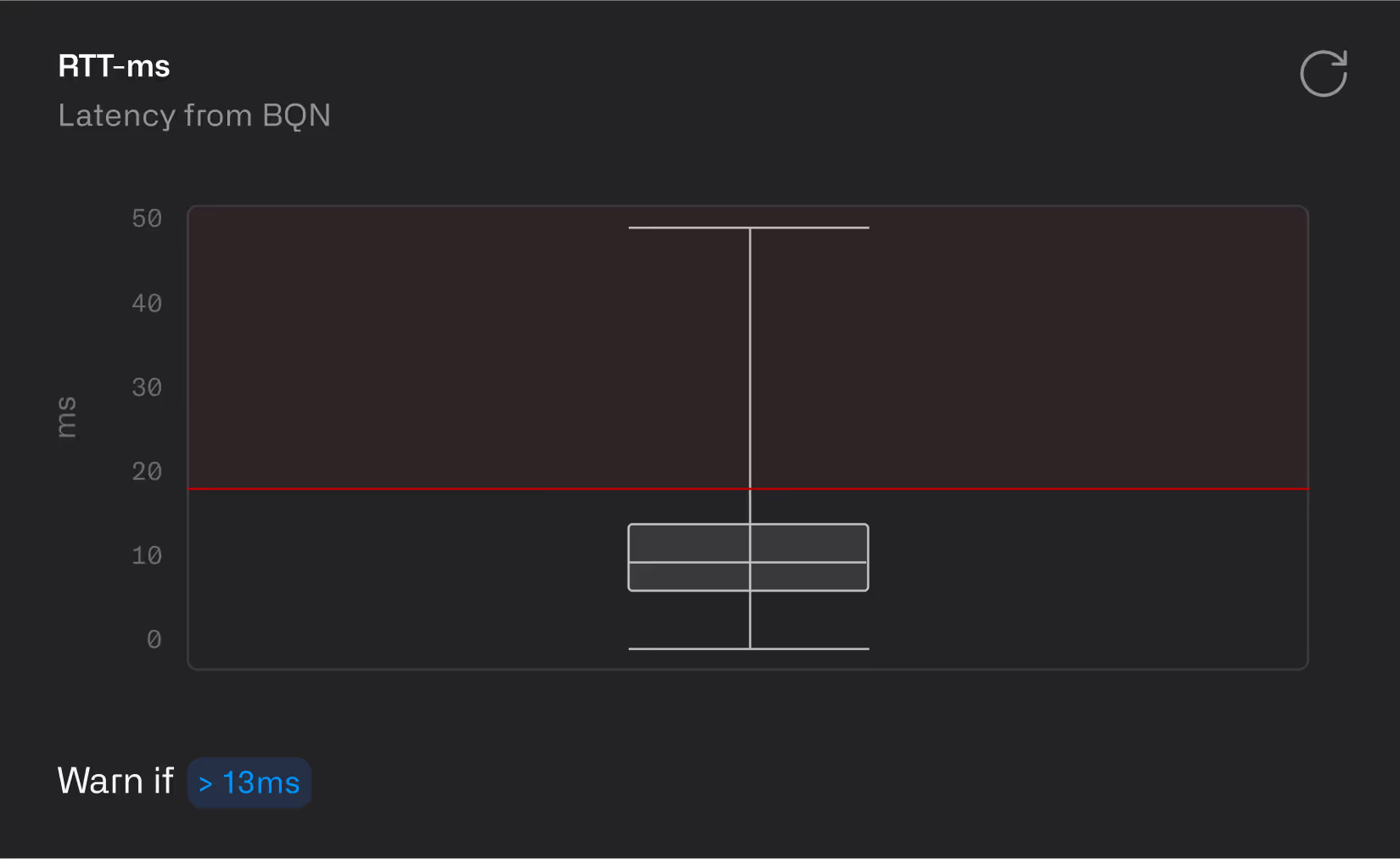
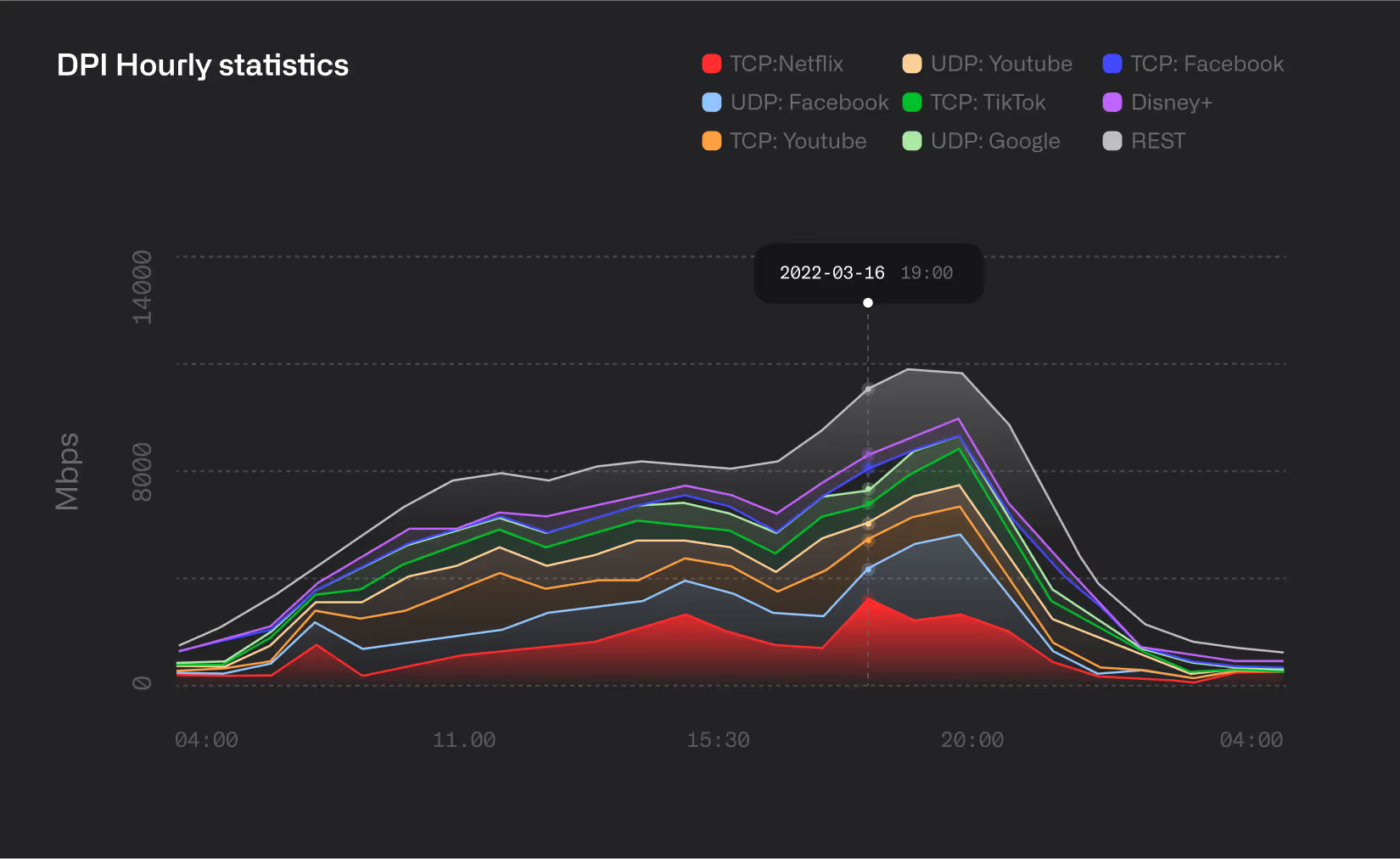

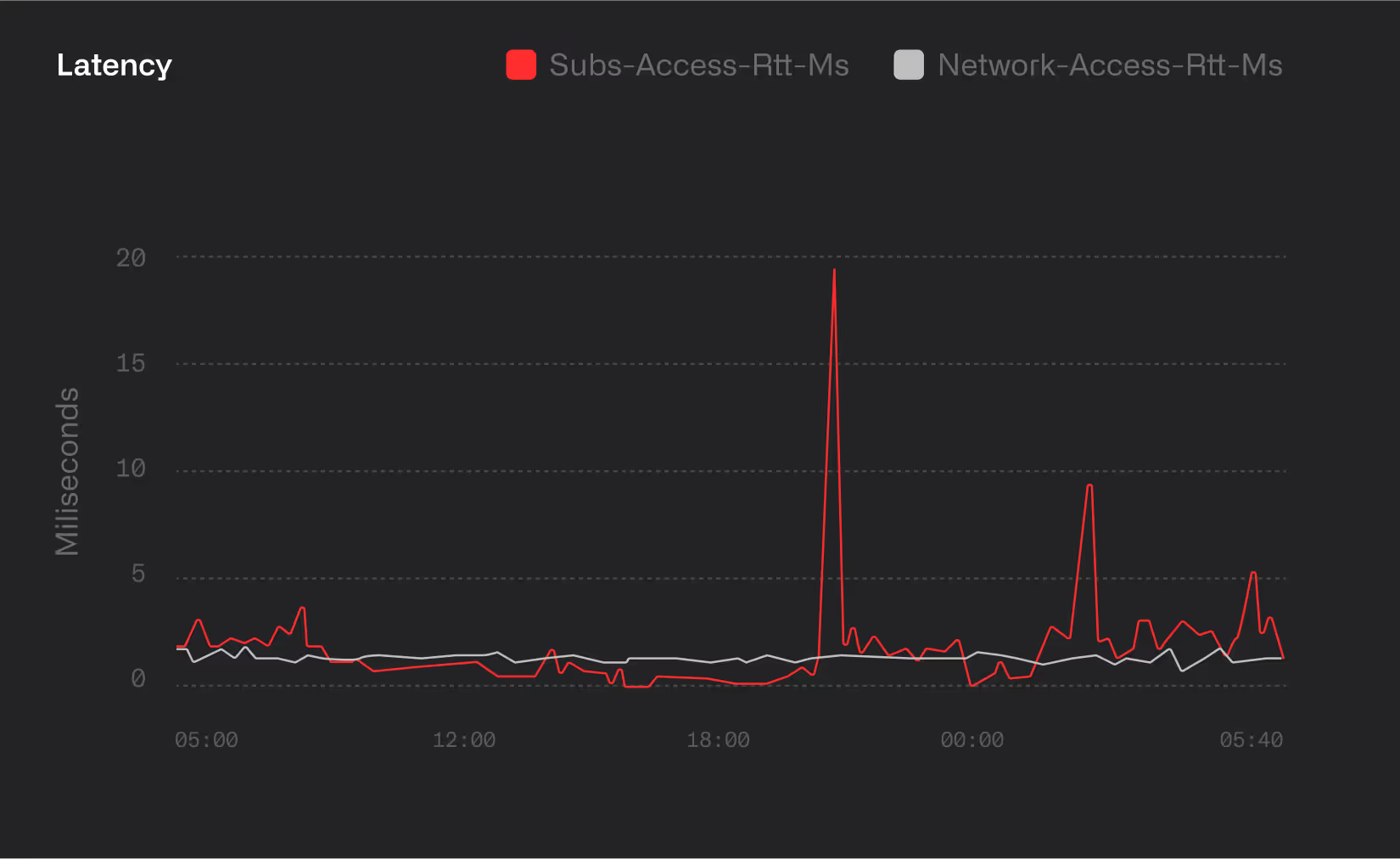


The DPI and network visibility from Bequant allow us to see what is happening in our network in real-time. Our customer support can diagnose everyday problems with it, and it also helps us detecting those areas of the network where we are approaching congestion.
We are dedicated to advancing technology that maximizes network quality by optimizing the use of available resources.

FAQ
Why is TCP optimization important for ISPs?
TCP optimization is important for ISPs because most subscriber traffic still runs over TCP, and not all TCP implementations perform well in today's access networks, especially in wireless links with random losses. In practice this means subscribers often get less speed than the network can deliver (slower downloads, unstable video) while paid-for capacity sits unused. TCP optimization fixes the transport itself, recovering that lost throughput without any change to subscriber devices or applications.
The Bequant BQN Platform does this with a transparent TCP optimization (TCPO) proxy that handles packet loss more efficiently, reducing retransmissions and latency and delivering more consistent application performance. The gains are measurable in production: InfoWest, for example, reported an 80% reduction in packet retransmissions after deploying Bequant.
Bequant TCPO also gives the rest of the platform better tools. Because TCP transport headers are not encrypted, each flow exposes accurate per-subscriber metrics (round-trip time, packet loss and retransmissions) that Bequant Automatic Congestion Management (ACM) uses to detect bottlenecks precisely and in real time. And when enforcing rate limits, the Bequant Active Queue Management (AQM) can leverage TCP's native flow-control mechanisms to slow the senders down at the source, keeping packet drops and retransmissions far lower than a traditional shaper or policer.
How can improving network performance reduce subscriber churn and support costs?
Improving network performance reduces churn and support costs by removing many of the problems that make subscribers dissatisfied and trigger support calls: high latency, packet loss, congestion, buffering, unstable video calls and inconsistent speeds during peak hours.
For churn, better performance means subscribers experience the service they expected more consistently. When gaming is responsive, video streams do not stall, calls remain stable and downloads complete at expected speeds, customers have fewer reasons to complain or switch providers. Bequant helps by reducing congestion, latency and packet loss while giving ISPs visibility into subscriber-level QoE before problems become churn risks.
For support costs, better performance lowers the number of tickets caused by network-quality issues. It also gives support and network teams clearer data when problems do occur, so they can identify the cause. That reduces repeat calls, escalations and unnecessary truck rolls.
What is the BQN Platform, and what problems does it solve for ISPs and mobile operators?
The BQN Platform is Bequant’s traffic optimization and network visibility platform for ISPs and mobile operators. It helps operators improve subscriber quality of experience by reducing congestion, latency, packet loss and retransmissions, while also giving network and support teams better visibility into subscriber, application and network-level performance.
For ISPs and mobile operators, the main problems it solves are overloaded access links, inconsistent customer experience during peak hours, complex subscriber policy enforcement, limited router scalability and slow troubleshooting. BQN addresses these issues with TCP optimization, active queue management, AI-based congestion mitigation, DPI-enabled application awareness and per-subscriber policy enforcement.
In practice, this helps operators get more value from existing infrastructure, delay unnecessary capacity upgrades, reduce support workload and deliver a more consistent service to subscribers.
How does Bequant integrate with existing billing and subscriber management systems?
Bequant integrates with existing billing and subscriber management systems by importing subscriber-plan information and using it to enforce per-subscriber traffic policies automatically.
The BQN Platform can receive subscriber data through RADIUS signaling, direct interaction with supported billing systems, or the Bequant REST API. This allows the platform to map each subscriber to the correct service plan without requiring engineers to configure queues manually on routers.
Bequant already supports integrations with multiple ISP billing platforms — currently 20 vendors and growing — including systems such as Powercode, Sonar, Splynx, UISP, Wisphub, Wispro and others.
How is the BQN Platform deployed, and does it require changes to an ISP's existing routers or network architecture?
The Bequant BQN Platform is deployed as an inline element on standard Intel or AMD servers. It is placed where it can see and manage subscriber traffic, usually between the subscriber access network and the upstream/core network.
It does not require replacing the ISP’s existing routers or redesigning the network architecture. In most deployments, Bequant complements the existing router infrastructure by offloading traffic optimization, subscriber policy enforcement and analytics from routers to a dedicated platform. This allows routers to focus on routing while BQN handles TCP optimization, active queue management, congestion mitigation, DPI-based policies and subscriber-level visibility.
The main network changes are normally limited to inserting the BQN server or cluster into the traffic path and integrating it with existing operational systems such as RADIUS and billing platforms when subscriber-specific policies are required. For multi-site or higher-capacity networks, multiple BQN servers can be clustered and centrally managed.
How does Bequant compare with Preseem for ISP traffic optimization?
The main differences between Bequant and Preseem are:
- TCP optimization accelerates TCP traffic and provides the rest of the Bequant features with accurate metrics for loss, latency and congestion. Preseem has no TCP optimization.
- Application awareness thanks to DPI. Preseem has no DPI feature.
- AQM with TCP-native speed control. Preseem AQM does not have TCP-native speed control and senders are slowed down by dropping packets.
- Up to 400 Gbps of throughput capacity per server. Preseem’s maximum capacity is 100 Gbps.
- Clustering several Bequant servers enables seamless management. Preseem has no clustering feature.
What results have ISPs achieved after deploying Bequant?
The benefits are manifold:
- Reduction in latency and packet loss. This appears across many deployments. Cajun Broadband achieved latencies below 10 ms and losses under 1%. InfoWest now consistently sees latencies between 15 ms and 28 ms, with losses below 0.4% — an 80% reduction.
- Fewer support calls. Bequant’s QoE improvements reduce the volume of customer support interactions. Resound Networks reports a 35% drop in calls related to network issues. Arbuckle has also seen a measurable decrease after deploying the solution.
- Congestion mitigation during peak hours. Bequant’s traffic optimization and application-aware policies help operators mitigate the effects of network congestion — whether in the network core or at the subscriber’s access link. La Harpe Telephone used Bequant to successfully manage traffic surges during special events. DigitalC is another example, resolving capacity constraints in one of their service areas.
- Opportunity to increase subscriber counts or plan speeds without degrading QoE. In some cases, the QoE gains can be reinvested to grow the subscriber base or raise plan speeds while maintaining service quality, avoiding the cost of a capacity upgrade. Arbuckle is a clear case: they were able to double the speed of some of their plans.
How does application-level DPI visibility help ISPs troubleshoot subscriber performance problems faster?
It helps by providing key insights into how the subscriber is using the Internet connection. For example, using a DPI enabled product such as Bequant, a technical support team can see what applications are being used at the home network and realize that the reported problem is related to that usage, for example to a big download in combination with streaming sessions by several members of the family.
How can an ISP reduce network congestion and improve subscriber quality of experience without adding capacity?
Bequant detects network congestion and manages the network capacity while improving the subscriber quality of experience. Keeping QoE constant, the network can accommodate more subscribers. Anibal Enríquez, CEO of Communicate, has reported 10% more users per Access Point.
Keeping the number of subscribers constant, the subscriber QoE is improved by reducing the network latency and losses. Cajun Networks has reported 83% reduction in latency and retransmissions going down from a high of 6,6% to an average of 0.32%.
Bequant traffic AI congestion mitigation (ACM) mitigates the congestion, active queue management (AQM) enforces rate limits in an optimal way and application-based traffic policies (DPI enabled) moderate the demand of heavy applications during peak hours.
More information can be found on Cajun Case study and Enhanced Subscriber QoE.

Bequant to Attend SCTE TechExpo26 in Atlanta @ Booth J1754

Bequant to Attend Connected Britain 2026 as Part of Its UK Expansion